
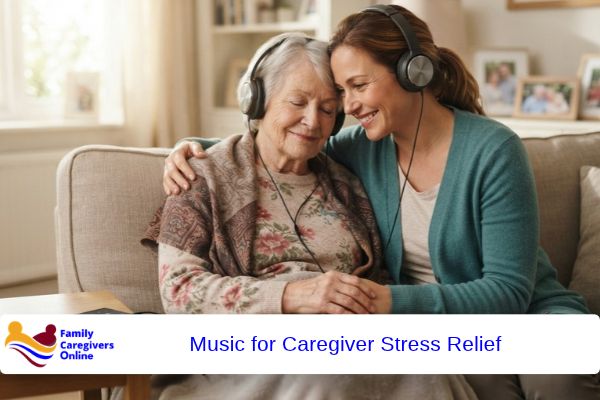
How can music help reduce stress and improve daily routines for the person in your care?
Familiar music is a powerful, low-cost tool that reduces anxiety, eases difficult daily routines, and sparks joyful connection for the person in your care, while giving family caregivers a restorative moment of emotional self-care.
Understanding the Challenge and Using Music as a Solution
Caregiving is a deeply rewarding journey, but it is also physically exhausting and emotionally demanding. Responsibilities often stretch around the clock, leaving little room for rest or personal renewal.
What Causes the Problem?
- Routine Friction: Daily care tasks—such as bathing, dressing, grooming, and preparing for sleep—frequently trigger anxiety, confusion, or physical resistance from the person in your care.
- Communication Barriers: Chronic illness, pain, or cognitive changes like dementia can make verbal communication difficult, leading to frustration, isolation, and feelings of disconnection.
- Caregiver Burnout: Without small, accessible moments of relief, the continuous pressure of managing medical needs and household tasks wears down a caregiver’s emotional resilience.
Bringing Music into Daily Caregiving
Music engages multiple areas of the brain associated with emotion, memory, attention, and movement. Its benefits extend far beyond simple entertainment:
- Easing Daily Routines: Playing gentle, familiar background music during grooming or morning dressing helps soothe transitions, smoothing out routines with less resistance and greater cooperation.
- Reaching Beyond Words: For individuals living with Alzheimer’s disease or other dementias, verbal memory may fade, but musical memory often remains intact. A familiar melody can spark smiles, humming, or shared memories without putting pressure on someone to remember or perform.
- Providing Instant Emotional Breaks: Music is not just for the person in your care. Taking even five minutes to listen to a favorite song or a calming meditation app can help you reset after a stressful appointment or challenging caregiving moment.
 Five Simple Ways to Get Started
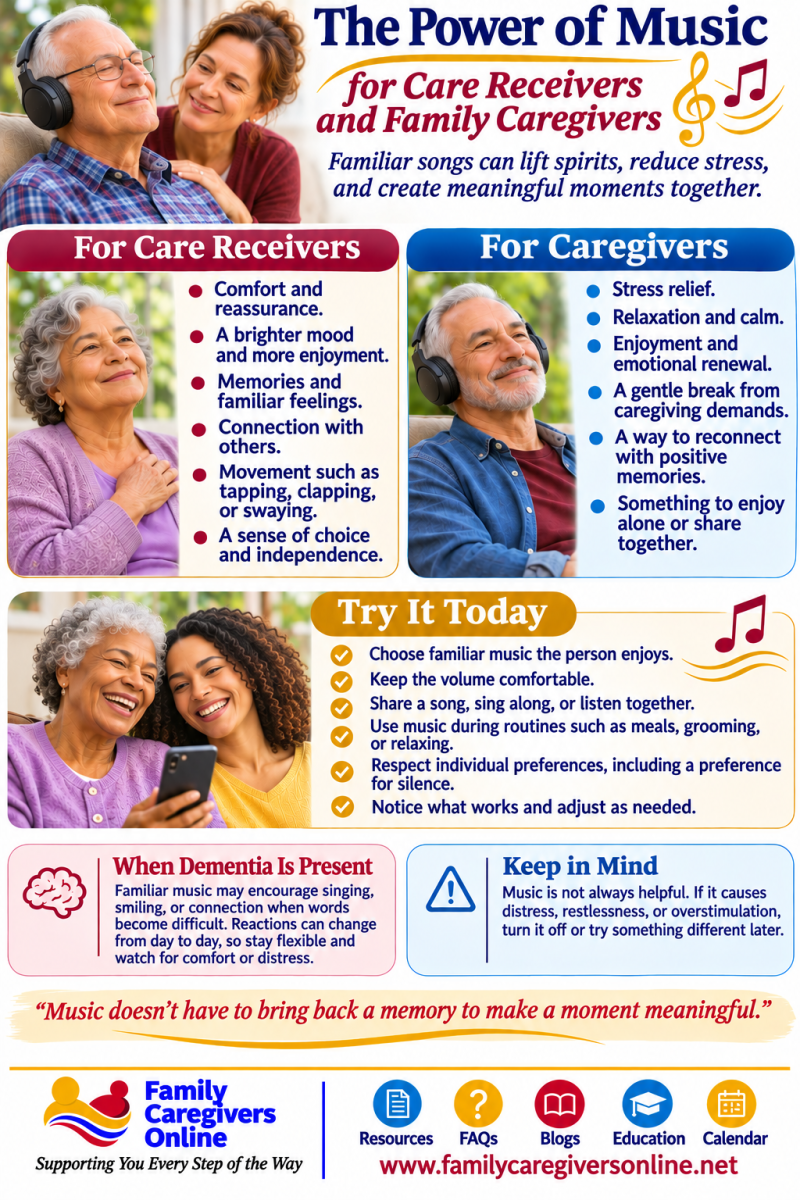 Five Simple Ways to Get Started
You do not need musical talent or an expensive subscription to bring music into your daily routine:
- Make a favorites list: Write down five to ten songs, artists, or genres that hold special meaning from the person’s formative years, cultural traditions, or family celebrations.
- Create two playlists: Keep one folder for lively, uplifting music and another for quiet, relaxing selections.
- Incorporate music naturally: Play cheerful music during morning breakfast, calming background tracks during afternoon rest, and softer melodies to establish a relaxing bedtime routine.
- Build your own caregiver playlist: Include tracks that help you decompress, feel energized, or reconnect with yourself when you need a moment of personal peace.
- Notice what works: Pay attention to which songs bring comfort or connection, and remain flexible—preferences can change from day to day.
When Music Is Not Helpful
Music is not a universal fix, and it is important to pay close attention to individual responses. A familiar song can occasionally bring up grief or sadness, and loud music or competing noises (like a running television) can easily overstimulate someone with cognitive challenges.
- Watch for signs of discomfort, such as restlessness, facial tension, or requests to turn the music off.
- Keep volumes comfortable, avoid loud advertisements, and always respect a preference for silence.
- Never force music as a substitute for addressing underlying pain, illness, or physical distress.
Helpful Resources for Caregivers
- Alzheimer’s Association (Art and Music): Practical recommendations for incorporating music into dementia care.
- Cochrane Research Review: Scientific overviews exploring the impact of music-based therapy on behavioral symptoms.
- Music & Memory (musicandmemory.org): Resources focused on personalized music strategies for older adults with cognitive challenges.
- Free Relaxation & Meditation Sources: Apps like Insight Timer or YouTube offer vast libraries of breathing guides and relaxing soundscapes to help both you and the person in your care unwind.
Sometimes the most meaningful part of caregiving is not what we accomplish on our checklist, but what we experience together. And sometimes, all it takes is a favorite song.
We hope this information is helpful to you in the important work you do as a family caregiver.
For more resources, subscribe to our free newsletter!



