
How do you help someone grieve a pet?
Losing a pet often brings heavy, layered grief—mourning not just the animal, but the daily routines, quiet companionship, and human ties that pet held together.
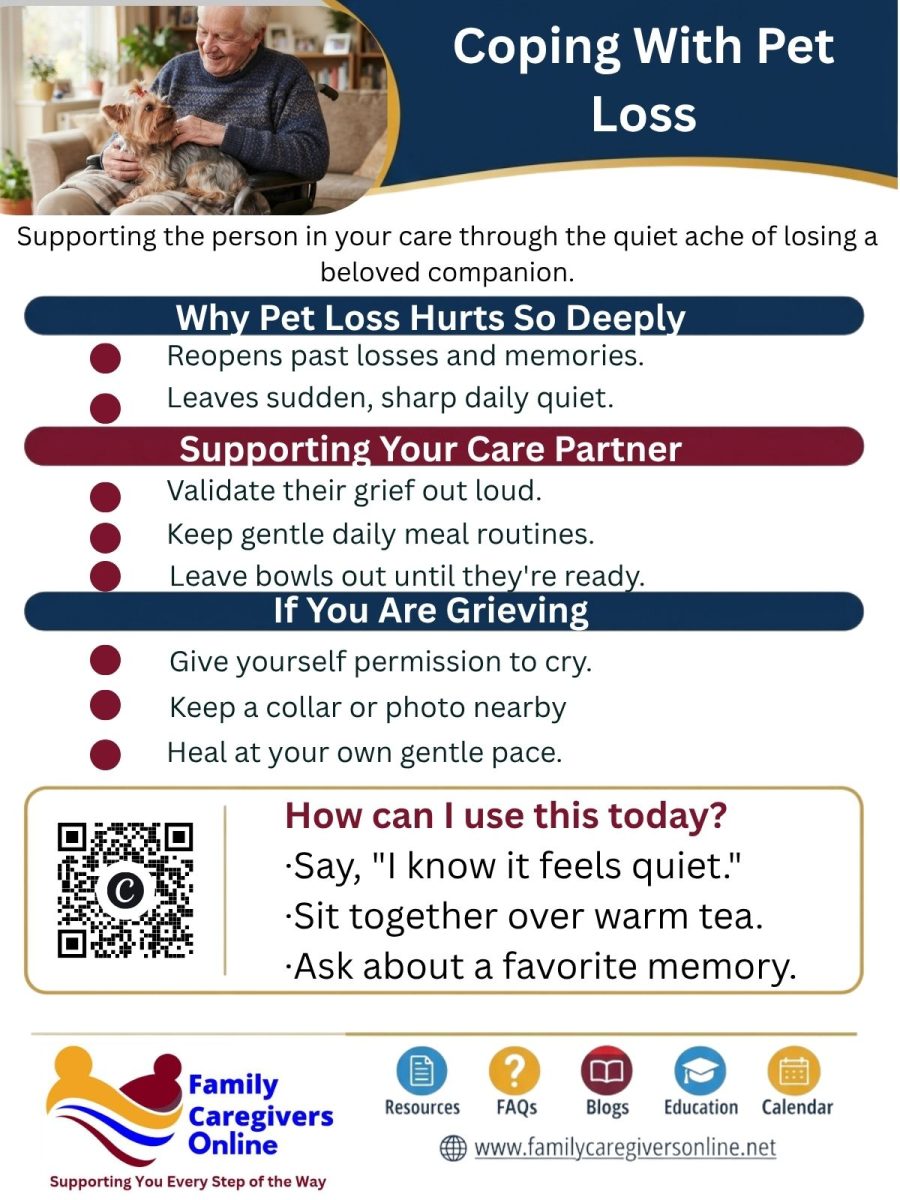
You can support the person in your care by validating their grief without minimizing it, keeping gentle daily routines, honoring memories, and sitting steady beside them in the quiet.
When my husband and I left South Africa, we took my parents’ only grandchild with us. To soften that empty space, I bought them a miniature Yorkshire Terrier.
That tiny dog quickly became the center of their world. He was especially devoted to my dad. When my dad passed away, that little Yorkie became the living thread connecting my mom to both my dad and to me.
Years later, when it was time for that sweet dog to cross over to doggie heaven, my mom’s grief was overwhelming. To the outside world, she had lost a pet. To her, she had just lost me, her grandson, and my dad all over again.
I see you sitting across from the person in your care right now, watching their heart break over a furry friend and feeling completely helpless. What you are witnessing—and what you are feeling—is heavy, real, and completely normal.
Why Pet Loss Hits So Hard
If you have never lived through it, it is easy to underestimate how deeply the death of a pet cuts. Well-meaning people might say, “At least it wasn’t a person,” or “You can always get another one.”
Those words sting because they miss the entire truth of what that animal meant. Here is what is often happening beneath the surface:
- It can trigger compounded grief. A pet often carries memories of seasons, places, and people we miss. When the pet dies, it can reopen past losses or bring up memories of someone no longer there.
- The loss of daily purpose. Feeding, walking, brushing, and letting a pet outside give shape to ordinary days. When the pet is gone, the sudden silence in the house can feel sharp and disorienting.
- The loss of unconditional touch. A pet is often the quiet presence that sits beside us, greets us at the door, and offers comfort without needing words.
Supporting the person in your care through this is exhausting because you cannot fix it. You cannot bring the pet back. And honestly, the hardest part of caregiving in these moments is managing your own helplessness while holding space for someone else’s pain.
How to Support the Person in Your Care
You do not need the perfect words to heal their broken heart. You just need to show up with patience and steady comfort. Here are practical, gentle ways to help them through the worst of the grief:
- Validate the grief out loud. Never treat it as “just a dog” or “just a cat.” Say the words: “I know how much you loved them, and I know how quiet the house feels today.” Permission to mourn openly takes away the shame people sometimes feel about crying over an animal.
- Keep a gentle rhythm to the day. Grief disrupts sleep and appetite. Without the usual feeding or walk times to anchor the day, hours can blur. Step in quietly—bring a warm drink at their usual time, open the curtains, or sit together where they used to spend time with their pet.
- Honor the memories instead of erasing them. Do not rush to pack away bowls, a leash, or a favorite blanket unless the person in your care asks you to. Let them talk about their pet’s funny habits. Frame a favorite photo, plant something outside, or share favorite stories together.
- Fill the quiet without overwhelming them. You do not need to force constant conversation or busy plans. Simply being present in the room—folding laundry, reading nearby, or sitting together—reminds them they are not alone in a quiet house.
- Watch for signs of prolonged distress. Grief takes time, but if the person in your care stops eating, cannot get out of bed, or withdraws completely for weeks on end, reach out to a healthcare provider or a grief support resource.
What to Do If You Are the One Grieving a Pet
If you are reading this while staring at an empty bed or a quiet doorway, please hear this: your heartbreak makes complete sense.
You did not just lose a pet. You lost a companion, a confidant, and a piece of your daily rhythm. Give yourself permission to cry. Talk out loud to them if it brings you comfort. Keep a collar or tag nearby for as long as you need to. Grief has no strict timeline, and you do not have to rush through it to make anyone else comfortable.
Moving Forward, One Quiet Day at a Time
The house will feel too quiet for a while. The mornings will ache when familiar sounds are missing.
You cannot rush this season, and you do not have to carry it perfectly. By simply acknowledging the weight of the loss, honoring the bond they shared, and sitting steady beside the person in your care, you are giving them something real: the reminder that they are still cared for, and they do not have to walk through the quiet alone.
We hope this information is helpful to you in the important work you do as a family caregiver.
For more resources, subscribe to our free newsletter!



